I am an environmental economist whose research aims to monetize the social costs (returns) of biodiversity losses (gains), particularly how ecological disturbances, such as wildlife diseases and biological invasions, affect human well-being through tropical cascades.
·
Peer Reviewed Papers
China's Sponge City Programme alleviates rain-induced road congestion
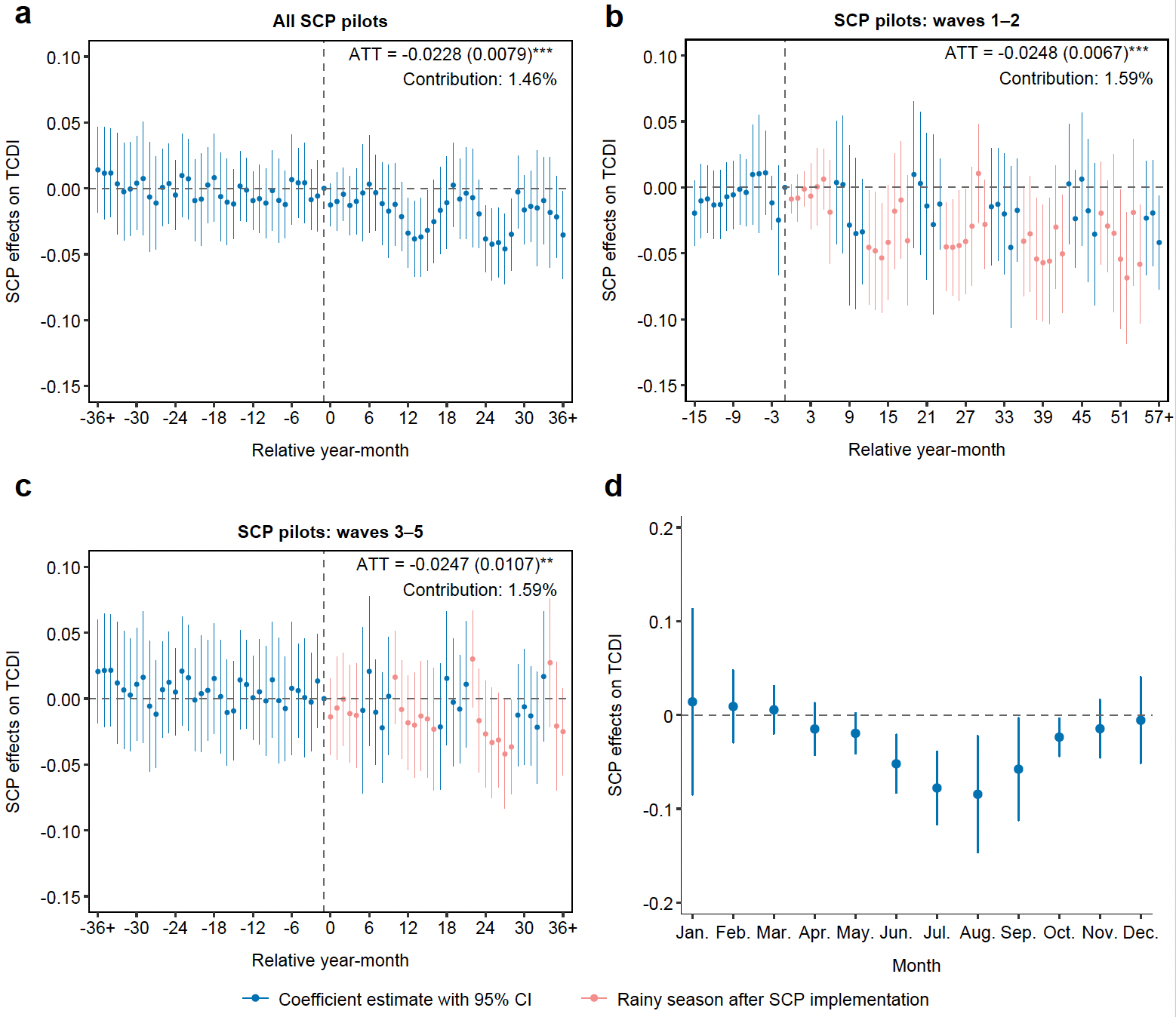
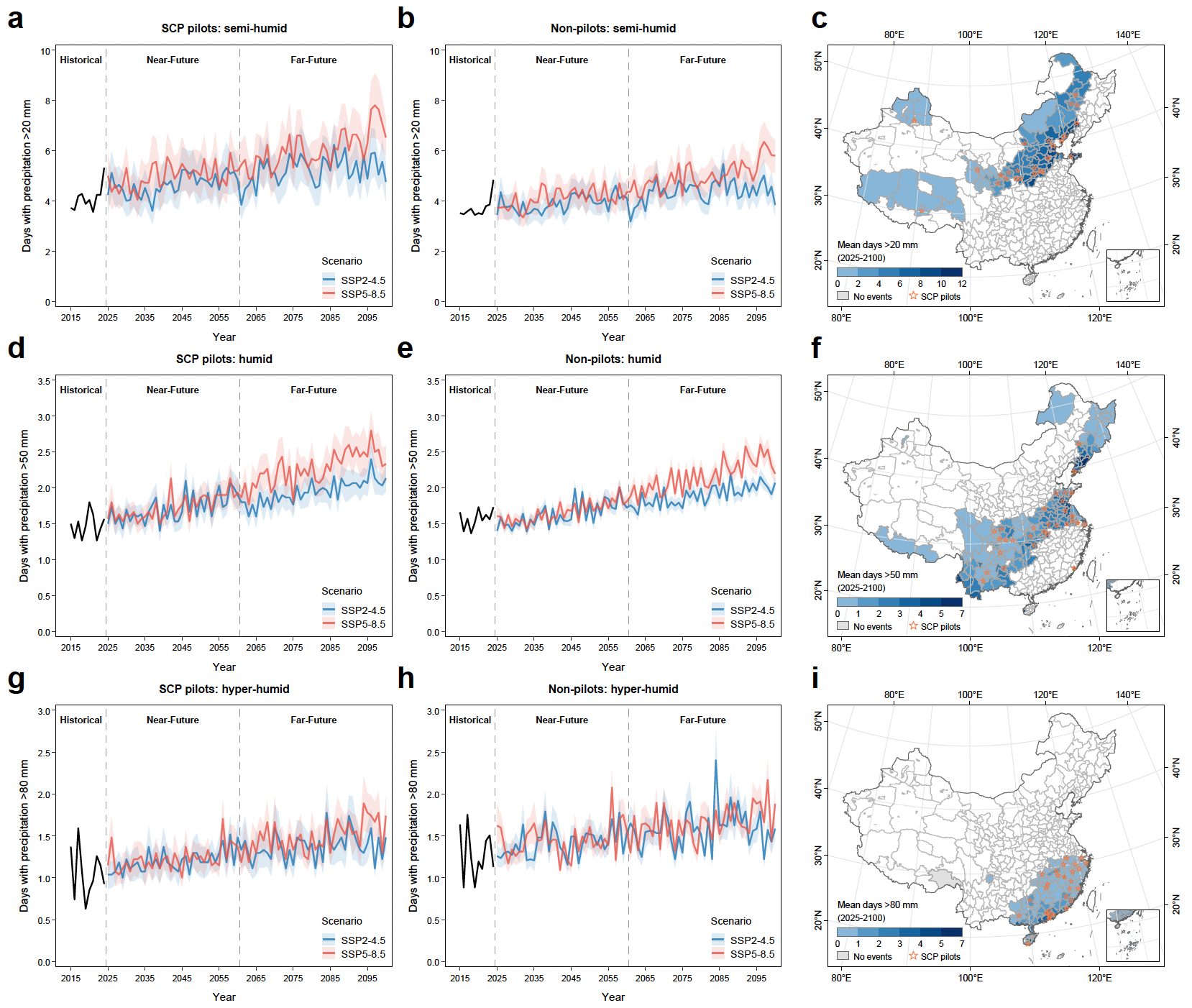
Nature-based solutions are increasingly used to strengthen urban climate resilience, yet their socioeconomic benefits remain poorly quantified. Here we show that China’s Sponge City Programme (SCP), which promotes nature-based stormwater management, reduces road congestion. Using data from 95 major cities (2015–2024) and the programme’s staggered rollout, we estimate a 1.46% average congestion reduction, concentrated in the rainy season and reaching 5.45% in August. Relief becomes more evident above approximately 30 mm of daily rainfall nationally, with higher thresholds in wetter regions. SCP implementation was followed by increased government procurement of green and water infrastructure, runoff control and targeted drainage maintenance, which together helped explain a substantial share of the reduction in congestion. We found limited evidence of expansion in conventional drainage networks. Climate projections suggest that days above these rainfall thresholds may become more frequent, implying that the programme’s potential mobility benefits may grow under future climate risk.
Dynamic and seasonal impacts of the SCP on road congestion. Historical and projected spatiotemporal patterns of threshold-exceeding precipitation days across China.
Working Papers
Biodiversity conservation governance in China at the science-policy interface
Daye Zhai, Yanan Xiang, Jinlong Liu, and Weiye Wang.
Under review at Conservation Letters
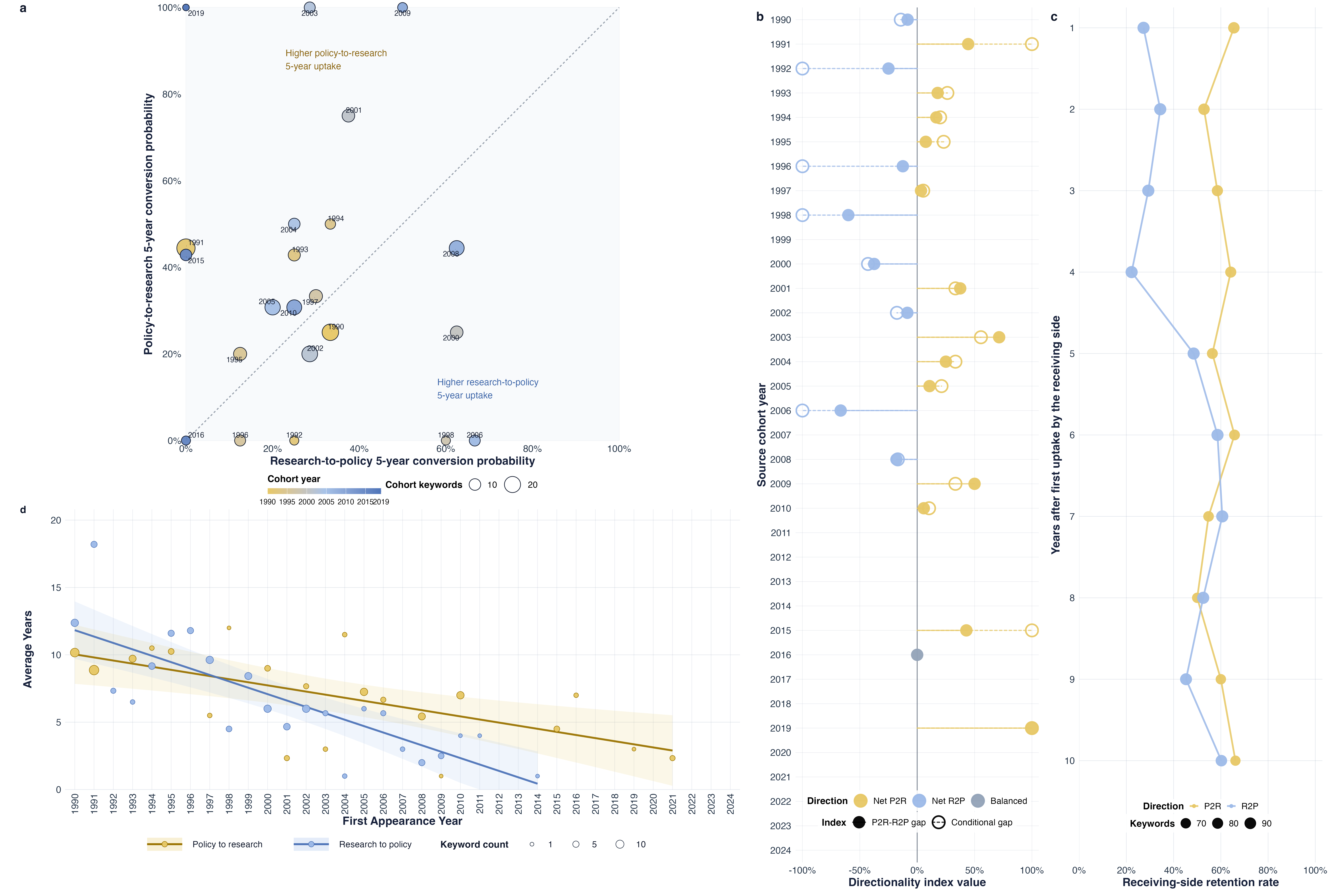
Biodiversity conservation has become a central pillar of China’s ecological civilization agenda. How relevant policymaking and knowledge production interact, and how scientific research responds to policy signals, however, remain insufficiently understood. We reveal critical dynamics of discursive competition and inheritance at the science–policy interface: research-led agenda-setting prevailed prior to 2005 but has increasingly devolved into one dominated by policy discourse, particularly from 2015 onward. This accelerating and durable policy-led turn brought a rapid proliferation and diversification of governance instruments, as well as a shift from single-target regulation toward multi-objective, integrated, systemic governance coordinated across an institutionally fragmented, polycentric authority structure. Despite the overall high quality of policy design, the governance system exhibits structural weaknesses inherent to China’s transformative policymaking and adaptive governance, including temporal myopia in planning horizons, participatory deficits, and internal tensions among competing objectives. Our findings contribute to understanding the importance of science–policy coupling for evidence-informed conservation policymaking and knowledge–policy co-production.
Policy-research keyword uptake, directionality, persistence, and diffusion speed.
Environmental externalities of subsidized crop insurance: Evidence from surface water quality in China
Yanghan Lin, Daye Zhai (co-lead), and Ziwei Ye.
Under review at Journal of Development Economics
Subsidized crop insurance protects farmers against agricultural risk, but it can also distort production decisions and generate unintended environmental consequences. We exploit China's staggered rollout of full cost insurance (FCI) and planting revenue insurance (PRI) for rice, maize, and wheat as a quasi-natural experiment. We develop a model in which a risk-averse farmer applies fewer inputs because output is sold at an uncertain price. FCI insures yield losses but leaves price risk uninsured, which lowers input use and nutrient runoff under any distribution of shocks. PRI insures both yield and price shocks and raises input use when its payouts arise mainly from price declines. Using a monthly county panel of surface water quality, we find that total nitrogen and total phosphorus concentrations decline on average after the reform, but these averages mask sharp differences across contracts. FCI reduces fertilizer use and improves water quality, with no meaningful reduction in grain yield; the water quality improvements are larger in areas with greater historical climate risk and insurance claim rates. PRI availability is associated with heavier fertilizer application and higher grain yield, reversing the water quality gains from FCI. At the central calibration, welfare is highest under FCI as its environmental benefit outweighs its production cost; revenue protection becomes preferable when the social value of grain or farmers' risk aversion is sufficiently high. The environmental and welfare effects of crop insurance therefore depend on the risks the contract protects.
Falling trees, failing grids: Biodiversity risk and infrastructure climate resilience
Ecopayments' deforestation impacts on highly intervened frontiers: Extending Ecuador's evidence in light of Amazon policy interactions
Chrissie Pantoja, Michael Tanner, Alexander Pfaff, Zhenhua Wang, and Daye Zhai.
To be submitted to Journal of the Association of Environmental and Resource Economists
Tropical deforestation creates serious local and global externalities. Ecopayments or Payment for Ecosystem Services (PES) offer conditional transfers that can increase conservation when they are well designed and targeted. However, impacts may be limited if participants were already conserving prior to enrollment, as may occur when other conservation or land-right policies have been implemented. To inform PES targeting, we assess ``conservation redundancy'' by estimating forest impacts of Ecuador's SocioBosque (SB) ecopayments program on Amazonian frontiers, both alone and in combination with Protected Areas (PAs) or Indigenous Lands (ILs). We distinguish between SB's smaller Individual and larger Collective contracts across the following policy configurations: SB alone; SB + PA; SB + IL; and SB+PA+IL. Using remotely sensed forest data, we apply Difference-in-Difference estimators and find some forest impact of SB Collective alone, with larger but imprecise effects for SB Individual alone. In specific, we find no additional effect from SB Collective within PAs and no significant additional effect when SB is combined with ILs or PA+IL, indicating substantial policy redundancy.
Works in Progress
The economic impacts of invasive species: Cost of substituting biological rodent control